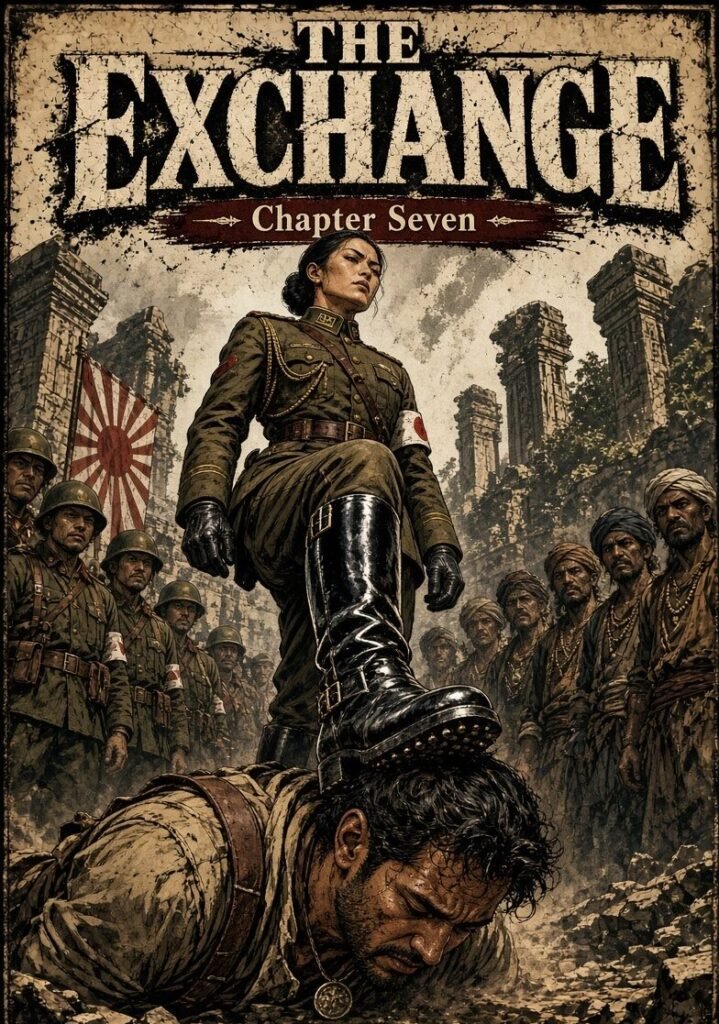
She kept her word. The three days were the worst of his captivity.
On the first morning she had him stripped to the waist and tied to the
flagpole in the centre of the yard, facing the prisoners. She did not use a
whip. She used her boots. She kicked his legs out from under him so that he
hung from his bound wrists, then kicked him in the ribs, the stomach, the
thighs, methodically, pausing between each blow to let him find his feet
again before knocking them away. The soldiers watched. The prisoners
watched. Somewhere in the second hour he stopped counting the kicks and
started counting his breaths instead, because breathing had become the only
thing he could still control.
When she finished, she cut him down herself. He fell at her feet. She put
her boot on the back of his head and turned his face toward the other
prisoners.
"Look at him," she told them in Hokkien. "Tell your friends in the hills
what you saw."
Then she leaned close, pressing his cheek into the dirt, and whispered in
English so only he could hear: "Your ribs are cracked, not broken. Your
face is untouched. Chen must be able to recognise you."
Even in this, she was precise.
On the second day she fed him.
It was the first real meal he had been offered since the pit: a bowl of rice
with pickled radish and a piece of dried fish, set on the ground in the middle
of the yard where everyone could see. His stomach clenched at the smell.
She waited until he had crawled to it. Until his hand was reaching for it.
Then she stepped into the bowl.
She did not grind the food this time. She simply stood in it, her boot
sunk to the ankle in rice, and looked down at him.
"Eat around my foot," she said.
He did. He ate from the edges of the bowl while her boot sat in the
middle of it, the rice pressed into the hobnails, the fish crushed beneath her
heel. When he had eaten everything he could reach, she lifted her foot and
held the sole before him, rice packed between the iron studs.
"And the rest."
The old Hakka farmer had done this on the first night. Arjun had
despised him for it. Now he took her heel in his good hand and ate the rice
from the sole of her boot while forty men watched, and he did not despise
himself, because he was too tired to feel anything at all.
When he finished, she set her boot on his head and pressed his face
down into the empty bowl.
"Tomorrow," she said, "you go home to your new friends. Tonight, you
will sleep at my door. On the stones. Without a blanket."
He did not sleep. It rained again, and he lay curled on the threshold with the
water running off the eaves onto him, his cracked ribs burning with every
breath. Sometime after midnight the door opened. He heard her boots on
the boards. She stood over him in the dark.
He waited for a kick. It didn't come.
"You wonder why I do this," she said quietly. Her voice was different in
the dark. Less precise. "You think I am mad, or cruel for its own sake.
Perhaps I am. But I will tell you something true, Rathore-san, because after
tomorrow no one will tell you anything true for a long time."
She crouched beside him. He could see her faint outline against the
lamplight from the room.
"My father was a samurai. When the Emperor abolished the domains,
he lost everything. His stipend, his rank, his sword. He could not work. He
did not know how. We starved in a rented room in Osaka while he sat in the
corner and remembered being important." She paused. "One winter a
moneylender came for the rent. My father knelt to him. On the floor.
Begged. The moneylender put his foot on my father's head and pressed it
down into the tatami, and my father thanked him."
The rain fell.

"I was nine years old. I decided that night that I would never be the one
on the floor." She stood. "That is all. It explains nothing. It excuses nothing.
But you asked me once, with your eyes, why. Now you know."
She stepped over him and went back inside.
He lay awake until dawn, and hated her more than ever, and understood
her a little, and hated himself for that most of all.

The exchange took place at noon on the third day, at a ruined temple on the
road south of Keelung where the hills came down to meet the rice paddies.
The Captain rode at the head of a column of thirty soldiers. Behind
them, roped together at the neck, walked the twelve prisoners she had
agreed to release. Arjun was ninth in the line. The old Hakka farmer was
not among them. He had watched them leave from the yard, and his eyes
had followed Arjun until the gate closed.
The temple sat in a clearing, its roof long collapsed, stone guardian
lions weathered to shapeless lumps flanking the steps. On the far side of the
clearing, just at the edge of the trees, stood Chen's men. Perhaps forty of
them, armed with a mix of Sniders and older weapons. Between the two
forces, roped together as the prisoners were, stood the two captured
Japanese soldiers, thin and filthy.
A man stepped out from among the rebels. He was older than Arjun had
expected, perhaps fifty, grey at the temples, with a long scar that ran from
his ear to the corner of his mouth. He wore the remains of a Qing officer's
coat. He carried himself like someone who had once commanded far more
than forty men.
Chen Qiu-shan.
The Captain dismounted. She walked alone to the centre of the clearing,
her sabre at her hip, her pistol holstered. Chen walked out to meet her. They
stopped three paces apart.
Arjun could not hear what they said. They spoke in Mandarin, formally,
briefly. At one point Chen glanced along the line of prisoners and his eyes
rested on Arjun for a moment before moving on.
Then the Captain turned and gestured. Sergeant Oda began cutting the
prisoners loose from the rope, one at a time, sending each across the She kept her word. The three days were the worst of his captivity.
On the first morning she had him stripped to the waist and tied to the
flagpole in the centre of the yard, facing the prisoners. She did not use a
whip. She used her boots. She kicked his legs out from under him so that he
hung from his bound wrists, then kicked him in the ribs, the stomach, the
thighs, methodically, pausing between each blow to let him find his feet
again before knocking them away. The soldiers watched. The prisoners
watched. Somewhere in the second hour he stopped counting the kicks and
started counting his breaths instead, because breathing had become the only
thing he could still control.
When she finished, she cut him down herself. He fell at her feet. She put
her boot on the back of his head and turned his face toward the other
prisoners.
"Look at him," she told them in Hokkien. "Tell your friends in the hills
what you saw."
Then she leaned close, pressing his cheek into the dirt, and whispered in
English so only he could hear: "Your ribs are cracked, not broken. Your
face is untouched. Chen must be able to recognise you."
Even in this, she was precise.
On the second day she fed him.
It was the first real meal he had been offered since the pit: a bowl of rice
with pickled radish and a piece of dried fish, set on the ground in the middle
of the yard where everyone could see. His stomach clenched at the smell.
She waited until he had crawled to it. Until his hand was reaching for it.
Then she stepped into the bowl.
She did not grind the food this time. She simply stood in it, her boot
sunk to the ankle in rice, and looked down at him.
"Eat around my foot," she said.
He did. He ate from the edges of the bowl while her boot sat in the
middle of it, the rice pressed into the hobnails, the fish crushed beneath her
heel. When he had eaten everything he could reach, she lifted her foot and
held the sole before him, rice packed between the iron studs.
"And the rest."
The old Hakka farmer had done this on the first night. Arjun had
despised him for it. Now he took her heel in his good hand and ate the rice
from the sole of her boot while forty men watched, and he did not despise
himself, because he was too tired to feel anything at all.
When he finished, she set her boot on his head and pressed his face
down into the empty bowl.
"Tomorrow," she said, "you go home to your new friends. Tonight, you
will sleep at my door. On the stones. Without a blanket."
He did not sleep. It rained again, and he lay curled on the threshold with the
water running off the eaves onto him, his cracked ribs burning with every
breath. Sometime after midnight the door opened. He heard her boots on
the boards. She stood over him in the dark.
He waited for a kick. It didn't come.
"You wonder why I do this," she said quietly. Her voice was different in
the dark. Less precise. "You think I am mad, or cruel for its own sake.
Perhaps I am. But I will tell you something true, Rathore-san, because after
tomorrow no one will tell you anything true for a long time."
She crouched beside him. He could see her faint outline against the
lamplight from the room.
"My father was a samurai. When the Emperor abolished the domains,
he lost everything. His stipend, his rank, his sword. He could not work. He
did not know how. We starved in a rented room in Osaka while he sat in the
corner and remembered being important." She paused. "One winter a
moneylender came for the rent. My father knelt to him. On the floor.
Begged. The moneylender put his foot on my father's head and pressed it
down into the tatami, and my father thanked him."
The rain fell.

"I was nine years old. I decided that night that I would never be the one
on the floor." She stood. "That is all. It explains nothing. It excuses nothing.
But you asked me once, with your eyes, why. Now you know."
She stepped over him and went back inside.
He lay awake until dawn, and hated her more than ever, and understood
her a little, and hated himself for that most of all.

The exchange took place at noon on the third day, at a ruined temple on the
road south of Keelung where the hills came down to meet the rice paddies.
The Captain rode at the head of a column of thirty soldiers. Behind
them, roped together at the neck, walked the twelve prisoners she had
agreed to release. Arjun was ninth in the line. The old Hakka farmer was
not among them. He had watched them leave from the yard, and his eyes
had followed Arjun until the gate closed.
The temple sat in a clearing, its roof long collapsed, stone guardian
lions weathered to shapeless lumps flanking the steps. On the far side of the
clearing, just at the edge of the trees, stood Chen's men. Perhaps forty of
them, armed with a mix of Sniders and older weapons. Between the two
forces, roped together as the prisoners were, stood the two captured
Japanese soldiers, thin and filthy.
A man stepped out from among the rebels. He was older than Arjun had
expected, perhaps fifty, grey at the temples, with a long scar that ran from
his ear to the corner of his mouth. He wore the remains of a Qing officer's
coat. He carried himself like someone who had once commanded far more
than forty men.
Chen Qiu-shan.
The Captain dismounted. She walked alone to the centre of the clearing,
her sabre at her hip, her pistol holstered. Chen walked out to meet her. They
stopped three paces apart.
Arjun could not hear what they said. They spoke in Mandarin, formally,
briefly. At one point Chen glanced along the line of prisoners and his eyes
rested on Arjun for a moment before moving on.
Then the Captain turned and gestured. Sergeant Oda began cutting the
prisoners loose from the rope, one at a time, sending each across the
She kept her word. The three days were the worst of his captivity.
On the first morning she had him stripped to the waist and tied to the
flagpole in the centre of the yard, facing the prisoners. She did not use a
whip. She used her boots. She kicked his legs out from under him so that he
hung from his bound wrists, then kicked him in the ribs, the stomach, the
thighs, methodically, pausing between each blow to let him find his feet
again before knocking them away. The soldiers watched. The prisoners
watched. Somewhere in the second hour he stopped counting the kicks and
started counting his breaths instead, because breathing had become the only
thing he could still control.
When she finished, she cut him down herself. He fell at her feet. She put
her boot on the back of his head and turned his face toward the other
prisoners.
"Look at him," she told them in Hokkien. "Tell your friends in the hills
what you saw."
Then she leaned close, pressing his cheek into the dirt, and whispered in
English so only he could hear: "Your ribs are cracked, not broken. Your
face is untouched. Chen must be able to recognise you."
Even in this, she was precise.
On the second day she fed him.
It was the first real meal he had been offered since the pit: a bowl of rice
with pickled radish and a piece of dried fish, set on the ground in the middle
of the yard where everyone could see. His stomach clenched at the smell.
She waited until he had crawled to it. Until his hand was reaching for it.
Then she stepped into the bowl.
She did not grind the food this time. She simply stood in it, her boot
sunk to the ankle in rice, and looked down at him.
"Eat around my foot," she said.
He did. He ate from the edges of the bowl while her boot sat in the
middle of it, the rice pressed into the hobnails, the fish crushed beneath her
heel. When he had eaten everything he could reach, she lifted her foot and
held the sole before him, rice packed between the iron studs.
"And the rest."
The old Hakka farmer had done this on the first night. Arjun had
despised him for it. Now he took her heel in his good hand and ate the rice
from the sole of her boot while forty men watched, and he did not despise
himself, because he was too tired to feel anything at all.
When he finished, she set her boot on his head and pressed his face
down into the empty bowl.
"Tomorrow," she said, "you go home to your new friends. Tonight, you
will sleep at my door. On the stones. Without a blanket."
He did not sleep. It rained again, and he lay curled on the threshold with the water running off the eaves onto him, his cracked ribs burning with every breath. Sometime after midnight the door opened. He heard her boots on
the boards. She stood over him in the dark.
He waited for a kick. It didn't come.
"You wonder why I do this," she said quietly. Her voice was different in
the dark. Less precise. "You think I am mad, or cruel for its own sake.
Perhaps I am. But I will tell you something true, Rathore-san, because after
tomorrow no one will tell you anything true for a long time."
She crouched beside him. He could see her faint outline against the
lamplight from the room.
"My father was a samurai. When the Emperor abolished the domains,
he lost everything. His stipend, his rank, his sword. He could not work. He
did not know how. We starved in a rented room in Osaka while he sat in the
corner and remembered being important." She paused. "One winter a
moneylender came for the rent. My father knelt to him. On the floor.
Begged. The moneylender put his foot on my father's head and pressed it
down into the tatami, and my father thanked him."
The rain fell.

"I was nine years old. I decided that night that I would never be the one
on the floor." She stood. "That is all. It explains nothing. It excuses nothing.
But you asked me once, with your eyes, why. Now you know."
She stepped over him and went back inside.
He lay awake until dawn, and hated her more than ever, and understood
her a little, and hated himself for that most of all.

The exchange took place at noon on the third day, at a ruined temple on the
road south of Keelung where the hills came down to meet the rice paddies.
The Captain rode at the head of a column of thirty soldiers. Behind
them, roped together at the neck, walked the twelve prisoners she had
agreed to release. Arjun was ninth in the line. The old Hakka farmer was
not among them. He had watched them leave from the yard, and his eyes
had followed Arjun until the gate closed.
The temple sat in a clearing, its roof long collapsed, stone guardian
lions weathered to shapeless lumps flanking the steps. On the far side of the clearing, just at the edge of the trees, stood Chen's men. Perhaps forty of them, armed with a mix of Sniders and older weapons. Between the two
forces, roped together as the prisoners were, stood the two captured
Japanese soldiers, thin and filthy.
A man stepped out from among the rebels. He was older than Arjun had
expected, perhaps fifty, grey at the temples, with a long scar that ran from
his ear to the corner of his mouth. He wore the remains of a Qing officer's
coat. He carried himself like someone who had once commanded far more
than forty men.
Chen Qiu-shan.
The Captain dismounted. She walked alone to the centre of the clearing,
her sabre at her hip, her pistol holstered. Chen walked out to meet her. They
stopped three paces apart.
Arjun could not hear what they said. They spoke in Mandarin, formally,
briefly. At one point Chen glanced along the line of prisoners and his eyes
rested on Arjun for a moment before moving on.
Then the Captain turned and gestured. Sergeant Oda began cutting the
prisoners loose from the rope, one at a time, sending each across the
Chen's camp lay two days' march into the mountains, in a hidden valley
with a waterfall at its head and a cluster of bamboo huts clinging to the
slopes. It held perhaps two hundred people: fighters, their wives and
children, old men who mended rifles and old women who cooked. It
smelled of woodsmoke and wet earth and freedom.
Arjun had not smelled freedom in over a month. It nearly broke him
more than anything she had done.
Lin found him on the first night. His face had healed into a map of
yellow and green bruises, and he walked with a limp, but he grinned when
he saw Arjun sitting alone by one of the fires.
"Indian," he said. "You came back for the old man. I told them. They
did not believe me."
"I didn't escape," Arjun said. "She caught me."
"I know. I saw." Lin sat down beside him. His grin faded. "I also saw
what she did at the exchange."
Arjun said nothing.
"Chen saw it too." Lin picked up a stick and poked at the fire. "Some
men say it was a message. She humiliates you in front of us so we will
believe you hate her. Other men say she humiliates you because she enjoys
it, and there is no message at all." He glanced sideways at Arjun. "Which is
it?"
Arjun looked into the flames. He thought of the old farmer in the yard at
Keelung. He thought of the woodcutter who would come in seven days
selling kindling. He thought of her voice in the dark, telling him about her
father's head pressed into the tatami.
"Both," he said honestly. "It's always both, with her."
Lin was quiet for a long time.
"Chen wants to see you," he said at last. "Tomorrow. He will ask you
many questions." He stood up and looked down at Arjun, and his face was
no longer friendly. It was the face of a man who had been beaten nearly to
death and had survived by learning whom to trust.
"Be careful how you answer him, Indian. I spoke for you once. I will
not be able to do it twice."
He walked away into the dark.
Arjun sat alone by the fire until it burned down to embers. Somewhere
above, the waterfall roared in the night. Somewhere below, forty miles
away, a woman in black boots was sitting at her desk writing dispatches,
and an old man was kneeling in the mud of a prison yard, waiting to learn
whether he would live.
Six days until the woodcutter.
He did not sleep that night either.
Saturday’s client was the drama producer.He was the youngest, perhaps forty, handsome in a polished way, wearingsunglasses even in the lift. Vikram recognised him at the door. He’d watchedhis latest hit series over the winter break with half his lab. The producer sawthe recognition in his face and went pale.“He won’t say anything,” Seo-yeon’s voice…
Oda came an hour before dawn, as he always did, yawning, his lanternswinging. He unlocked the chain from the iron ring and tugged it once, theway a man tugs a dog’s lead.”In.”Arjun crawled across the threshold on his knees and elbows. The roomwas dark except for the lamp on her desk, turned low. She was…